
The Sacred Abhisheka అభిషేకం — పవిత్ర స్నానం
When water, milk, and sacred substances are poured over the divine form — it is not the deity that is purified. It is the devotee. Every drop of Abhisheka washes the inner world clean.
పవిత్ర జలం, పాలు మరియు పంచామృతం దేవత రూపంపై పోయబడినప్పుడు — పరిశుద్ధమయ్యేది దేవత కాదు. భక్తుడు. ప్రతి అభిషేక బిందువూ అంతర్గత ప్రపంచాన్ని పవిత్రం చేస్తుంది.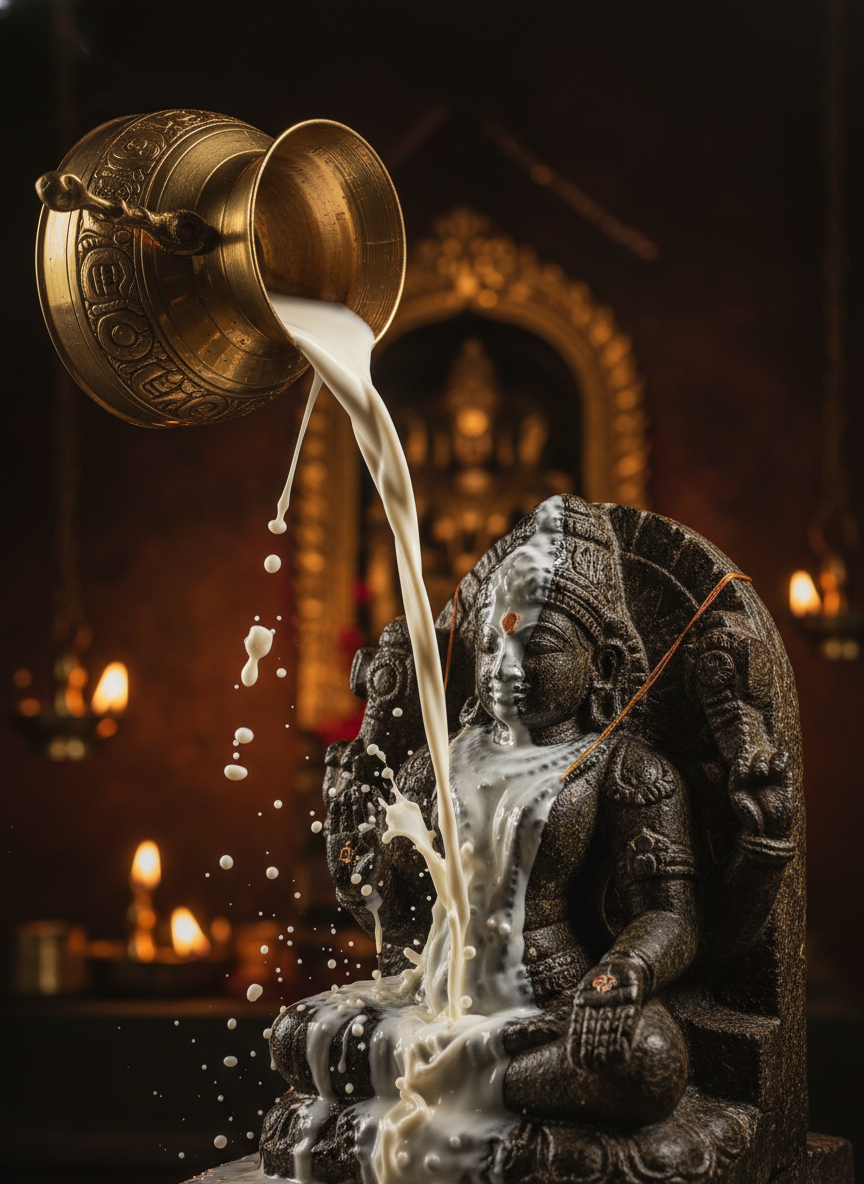
What is Abhisheka?
అభిషేకం అంటే ఏమిటి?"Abhisheka is the most tender act of Shakti worship. When you pour milk over the divine form with a full heart, you are saying: 'I know nothing but this love — and this love is all I offer.'" "అభిషేకం శక్తి ఆరాధనలో అత్యంత కోమలమైన చర్య. సంపూర్ణ హృదయంతో దేవత రూపంపై పాలు పోసినప్పుడు, మీరు చెప్తున్నారు: 'ఈ પ્રેમ తప్ప నాకు మరేమీ తెలియదు — ఈ ప్రేమయే నా అర్పణ.'"
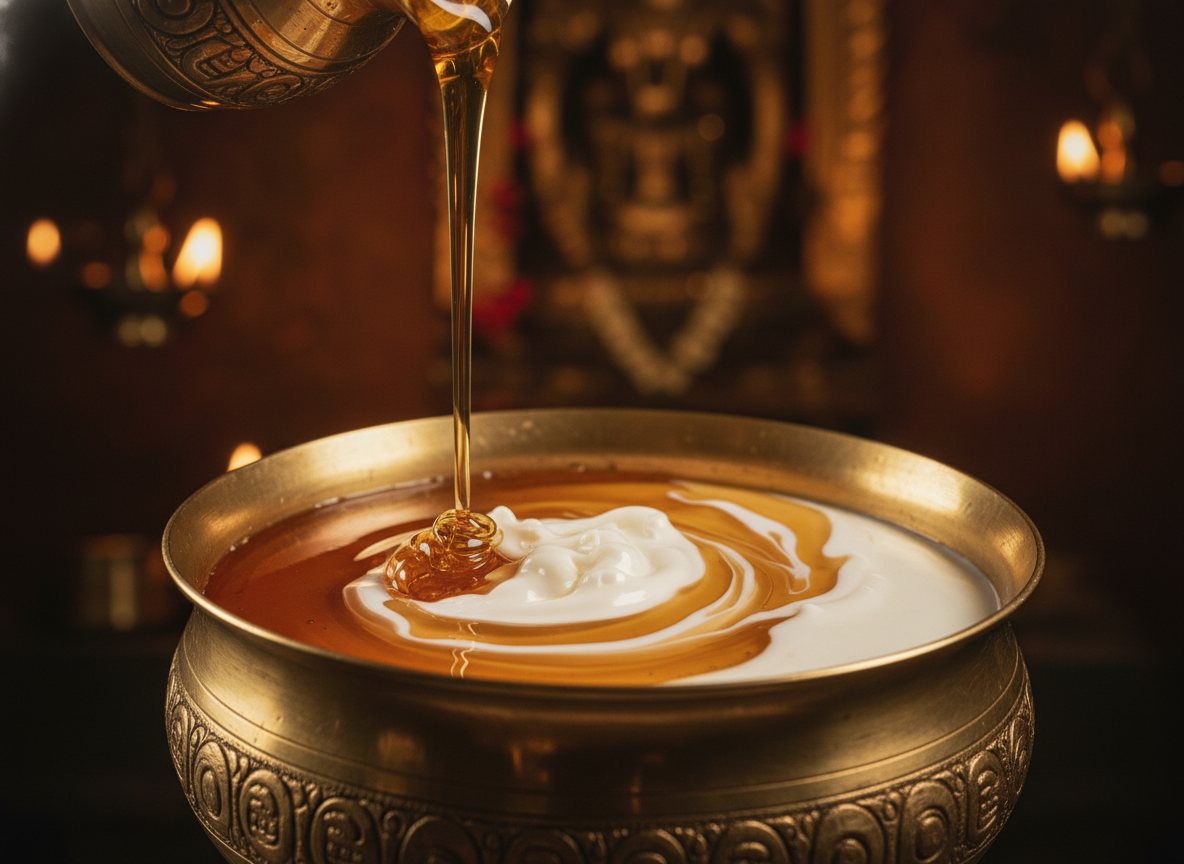
Abhisheka means the anointing or sacred bathing of a deity's idol or Shivalinga with holy substances — water, milk, honey, ghee, curd, and more. It is one of the most ancient and intimate forms of Vedic worship, rooted in the idea that by bathing the divine, the devotee symbolically purifies their own inner world.
అభిషేకం అంటే దేవత విగ్రహాన్ని జలం, పాలు, మధువు, ఘృతం వంటి పవిత్ర పదార్థాలతో స్నానం చేయించడం. ఇది వేద ఆరాధనలో అత్యంత పురాతనమైన మరియు హృదయపూర్వకమైన రూపం.
Panchamrita — Five Nectars of Devotion
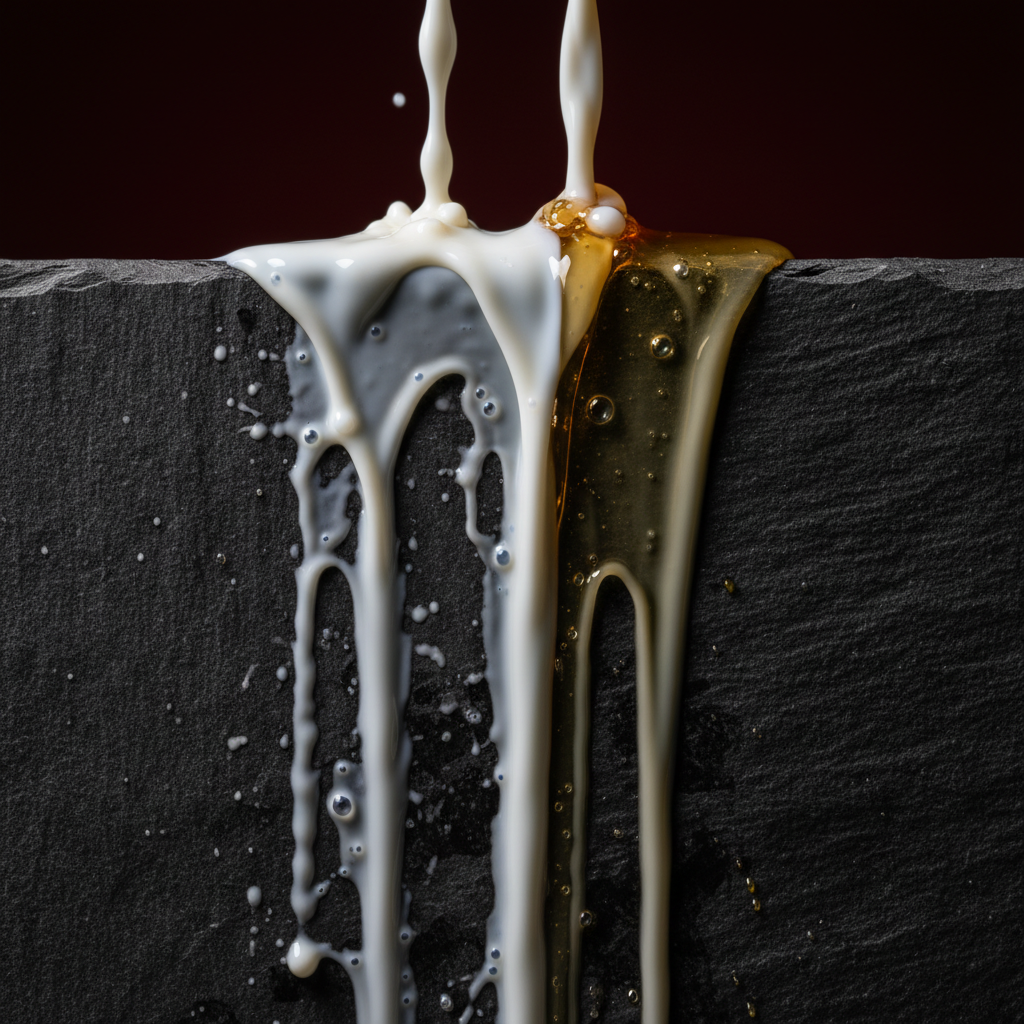
పంచామృతం — భక్తి యొక్క ఐదు పవిత్ర అమృతాలుPanchamrita Abhisheka uses five sacred substances — each carrying a deep spiritual symbolism and a unique divine quality that purifies a corresponding layer of the devotee's being.
Purity and nourishment. Milk symbolises the unconditional nourishing love of the divine mother — pure, white, life-giving, without condition or boundary.
Purifies the mind · Bestows purity of thoughtSweetness and the reward of patient effort. Honey is the fruit of tireless industry — representing the sweetness that comes from consistent, devoted sadhana.
Bestows sweetness in speech and relationships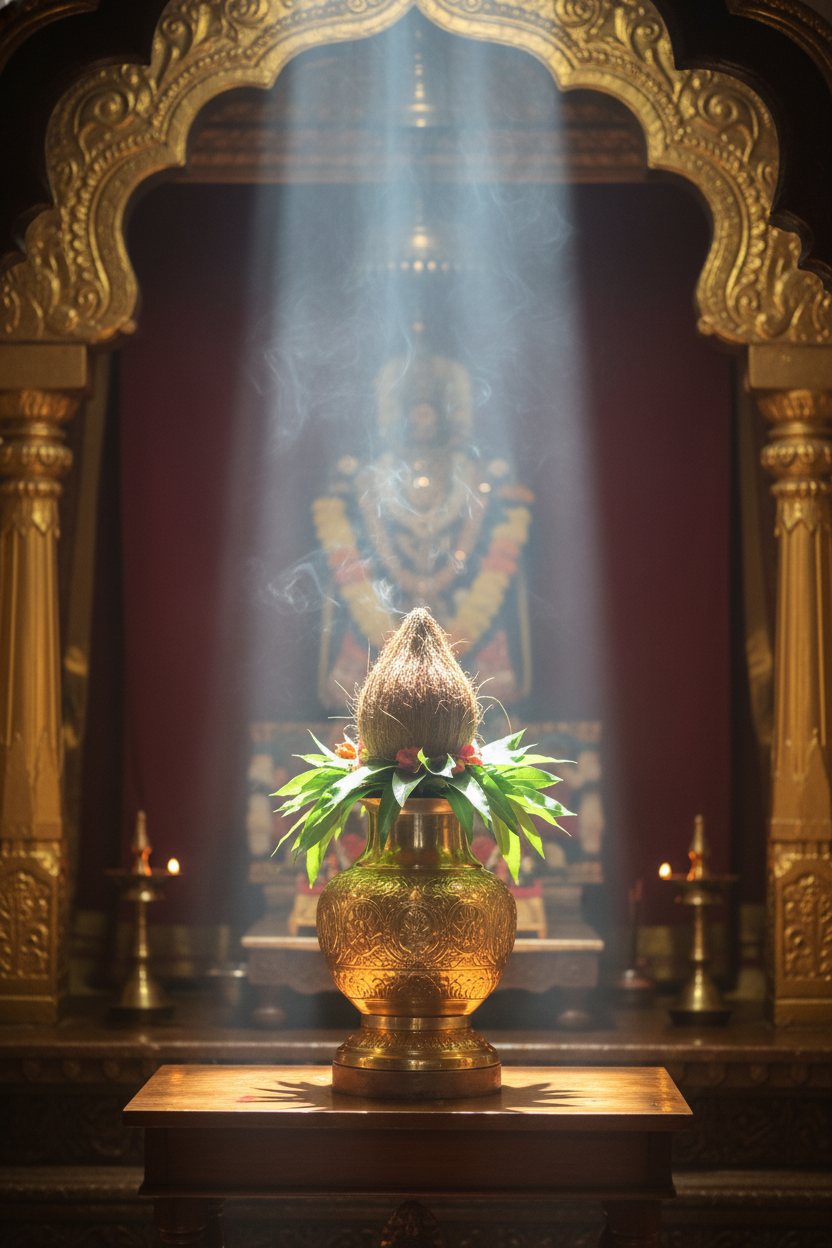
Clarity and illumination. Clarified butter represents the refined intellect — all impurities removed, leaving only the pure essence that sustains the sacred flame.
Bestows clarity of intellect · Illuminates wisdomTransformation and vitality. Curd is milk transformed — representing the seeker's capacity to transform and evolve, and the prosperity that comes from patient spiritual ripening.
Bestows prosperity · Transforms adversity into growthJoy and the sweetness of liberation. Sugar dissolves completely in liquid — representing the ego's dissolution in divine grace and the bliss of pure awareness that remains.
Bestows joy · Dissolves ego · Awakens AnandaAbhishekas at Hreem Peetham
హ్రీం పీఠంలో అభిషేకాల రకాలుEach abhisheka uses different sacred substances, each invoking a unique aspect of divine grace for the devotee's specific need.
 ✦ Signature
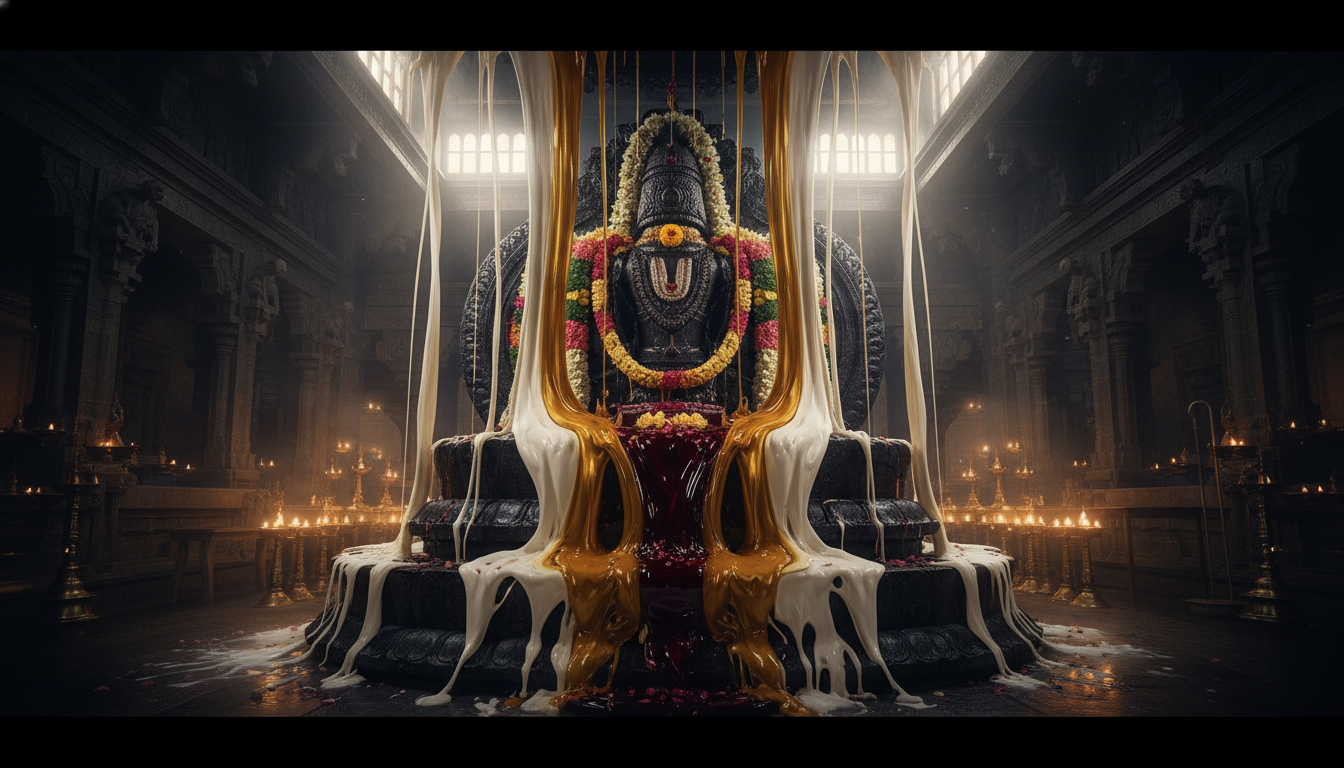
The most complete and auspicious form of Abhisheka — the deity is bathed with all five sacred substances in sequence: milk, honey, ghee, curd, and sugar water. Each substance cleanses a different layer of the devotee's being, leaving the inner world utterly purified.
దేవతను ఐదు పవిత్ర పదార్థాలతో వరుసగా స్నానం చేయించే అత్యంత పవిత్రమైన అభిషేక విధానం.
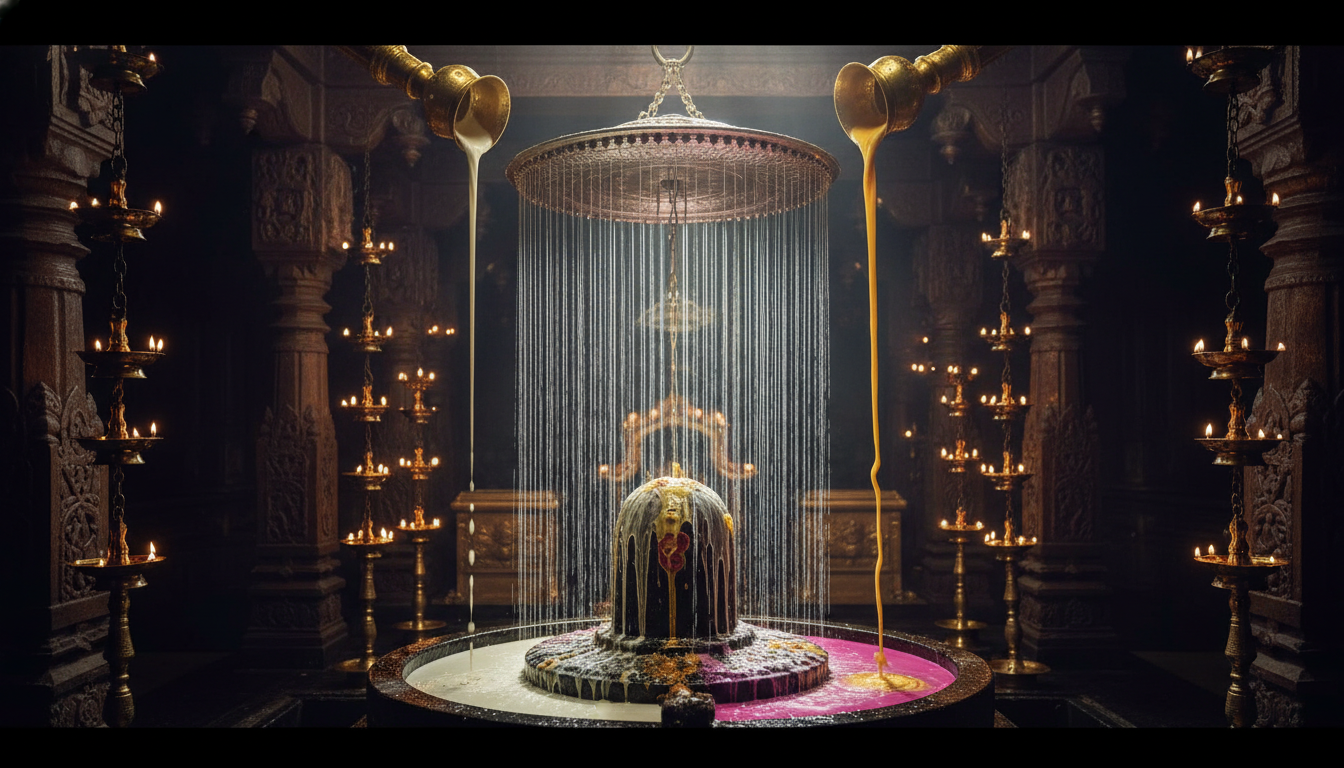
The daily ritual bathing of the deity with pure, sacred water — the most fundamental and accessible abhisheka, performed every morning.
Bathing the deity entirely with fresh, pure milk — invoking the unconditional motherly grace of Shakti Matha and bestowing purity of mind.
Bathing the deity with fragrant rosewater or sandalwood-infused water — awakening devotional longing and filling the sacred space with divine fragrance.
The supreme abhisheka — one thousand streams of water poured simultaneously through a specially crafted vessel, invoking the full blessing of all thousand divine names.
How an Abhisheka is Performed
అభిషేకం ఎలా నిర్వహించబడుతుందిEach step in the Abhisheka ritual carries a precise meaning and builds the sacred energy of the worship from beginning to completion.
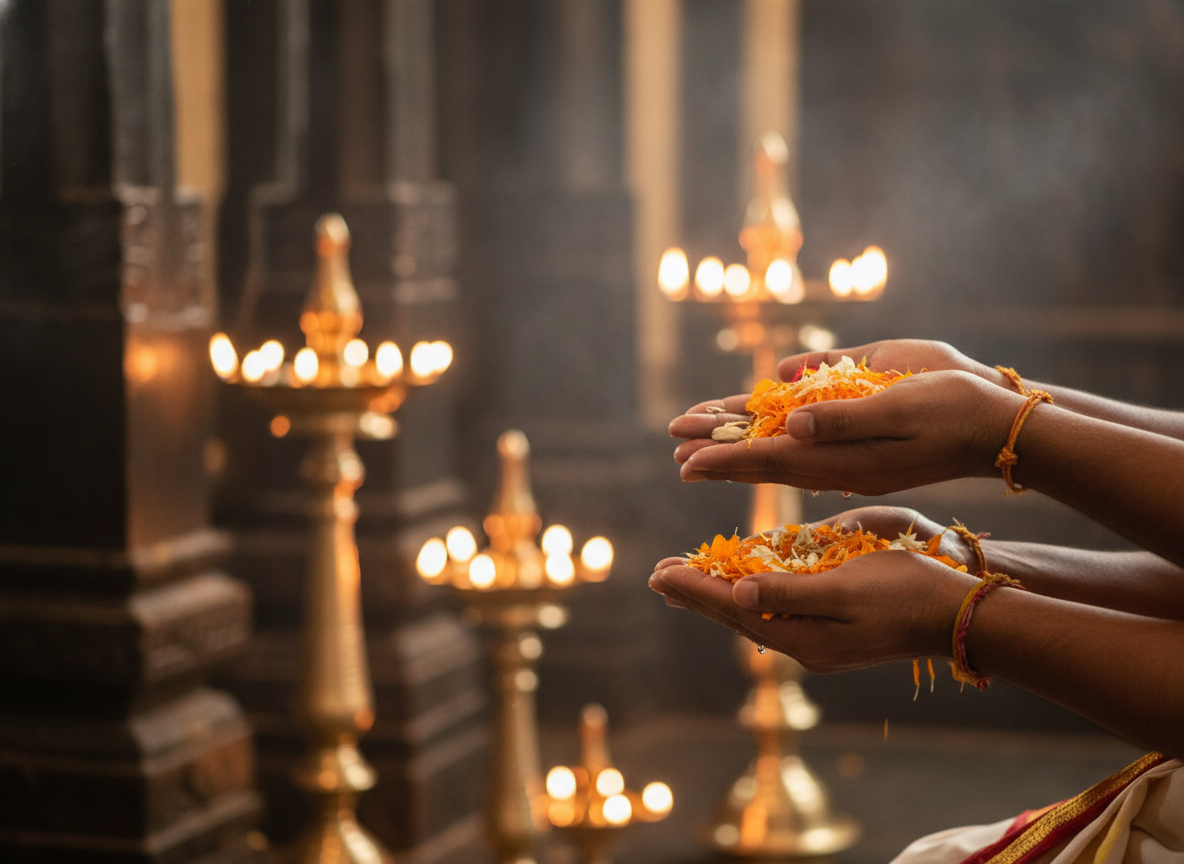
The priest formally declares the Sankalpa — the name of the devotee, the deity, and the intention — and invites the divine to be fully present in the idol for the duration of the ritual.
The sacred Kalasha vessels are filled with the designated abhisheka substances and consecrated with specific mantras, transforming ordinary milk and water into divine nectar.
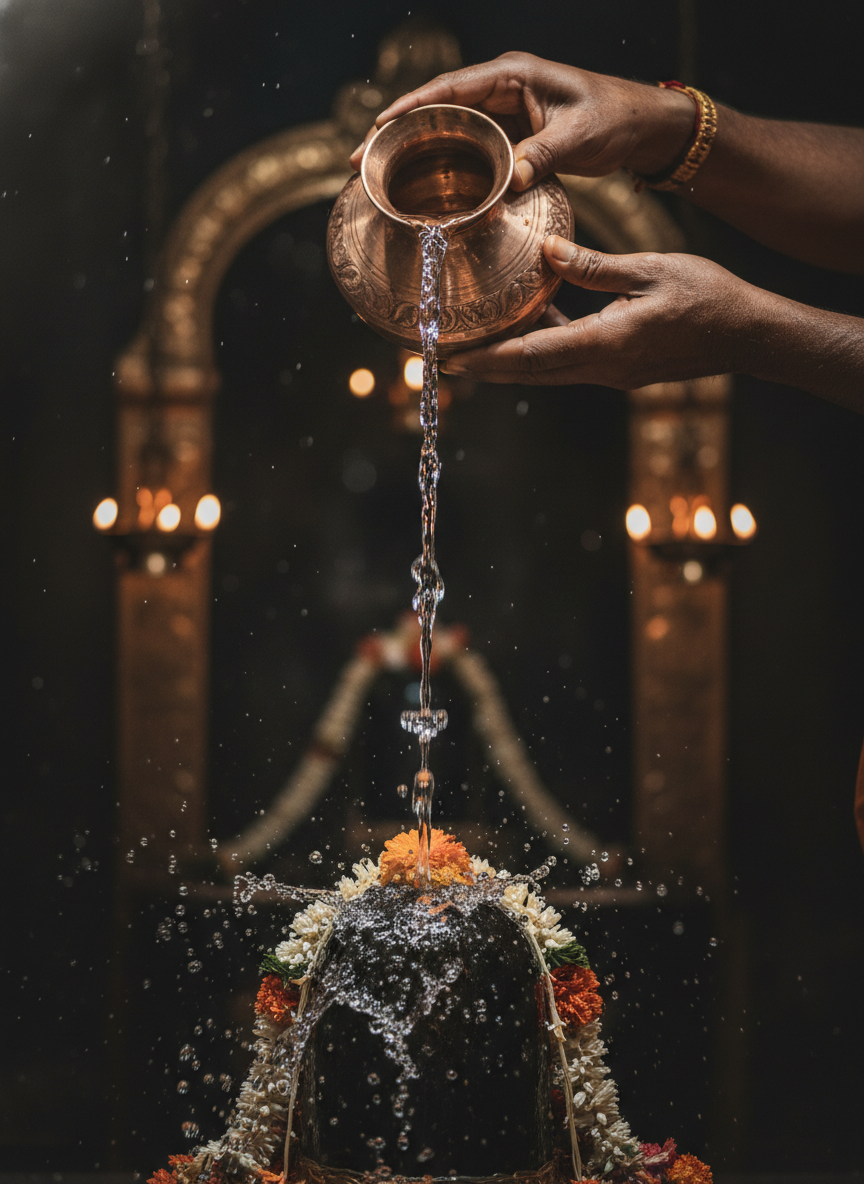
Each substance is poured over the deity in sequence — water, then milk, honey, ghee, curd, sugar water, and finally pure water again — each accompanied by the precise mantra invoking that substance's divine quality.
After the abhisheka, the deity is adorned with fresh flowers, garments, and jewellery. The ritual concludes with Aarti and the distribution of Teertha (the sacred abhisheka water) to all devotees as prasad.

"When you pour milk over the divine form, the milk does not purify the deity. The deity purifies the milk — and through the milk, you. This is the mystery of Abhisheka: the one bathed is within you."
"మీరు దేవత రూపంపై పాలు పోసినప్పుడు, పాలు దేవతను శుద్ధి చేయవు. దేవత పాలను శుద్ధి చేస్తుంది — పాల ద్వారా మిమ్మల్ని. ఇదే అభిషేకం యొక్క రహస్యం." Hreem Peetham · Shakti Upasana Participate in Abhisheka →The Phalas of Abhisheka
అభిషేకం యొక్క ఫలితాలు
What Abhisheka Bestows
అభిషేకం ప్రసాదించే దివ్య ఫలాలుAbhisheka Through the Lens
అభిషేకం యొక్క పవిత్ర దృశ్యాలు
Special Occasion Abhishekas
ప్రత్యేక సందర్భాల అభిషేకాలుCertain auspicious days call for a more elaborate abhisheka — when the divine grace is heightened and the blessing multiplied many-fold.
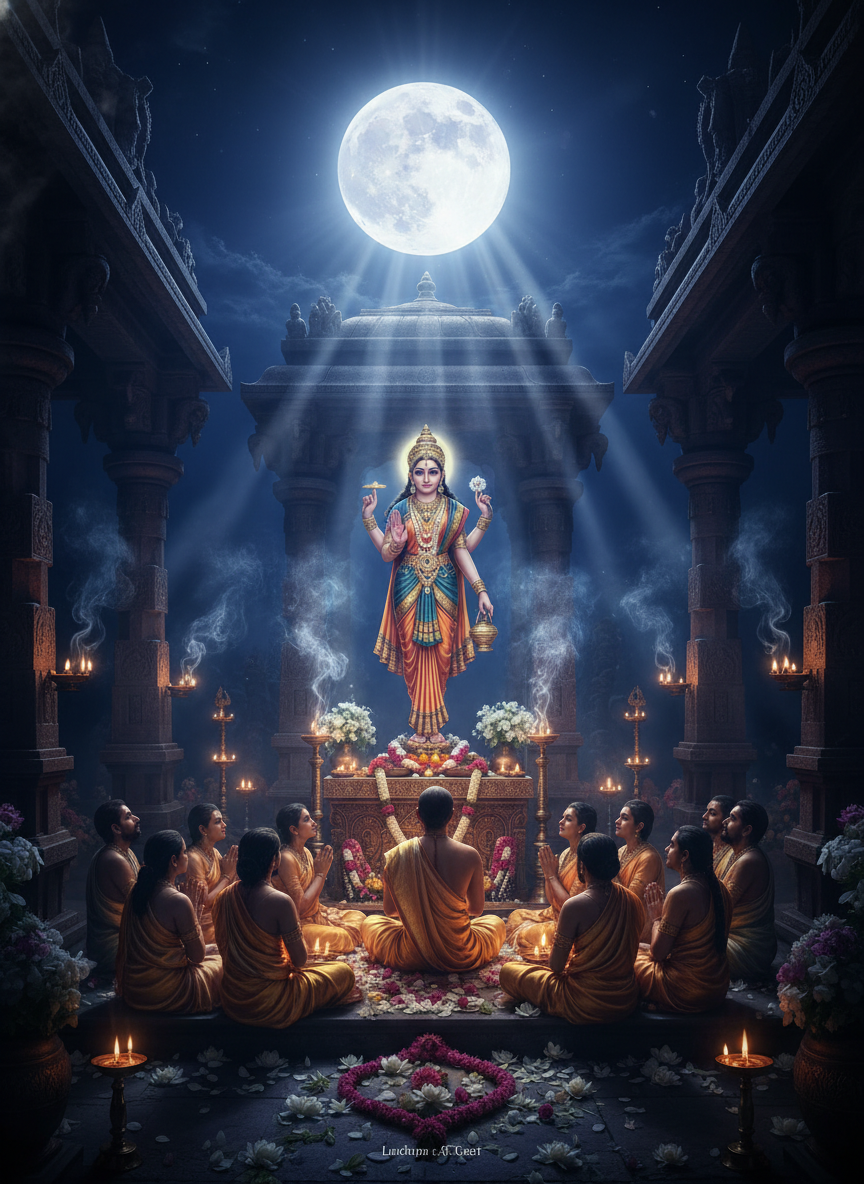
The full moon is the most potent time for Shakti worship. An extended abhisheka performed under the moon's full grace with special substances.
Book →
During Navaratri, a special Abhisheka is performed each evening — with a different substance on each night, corresponding to the nine forms of Shakti.
Book →
Celebrate a birthday, anniversary, or auspicious occasion with a personalised Abhisheka performed in the name of the devotee — a divine blessing for the year ahead.
Book →
[Description of this special occasion abhisheka — the significance of the day, the divine form honoured, and the unique grace it bestows.]
Book →Book an Abhisheka Seva
అభిషేక సేవను నమోదు చేయండిEvery drop of sacred substance offered in your name carries your prayer directly to Shakti Matha.
- Name in Sankalpa
- Teertha (sacred water) by post
- Digital blessing certificate
- Participation in group abhisheka
- Full Sankalpa in your name
- Attend in person / join online
- Kalasha poured in your name
- Teertha, Prasad & sacred ash
- Post-ritual photo/video shared
- Entire abhisheka for your family
- All 5 panchamrita substances
- Dedicated priest team
- Extended pooja + alankara
- Full abhisheka video recording
- Acharya blessing post-ritual
The sacred kalasha is ready. The mantra is alive on the priest's lips. The divine form awaits your love. Come — let the sacred waters carry your prayer home.